
An illustrated story about how Canon went from 6-zone metering sensors (1987) to their most advanced 216-zone 400,000-pixel RGB+IR metering systems (2020).





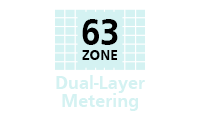




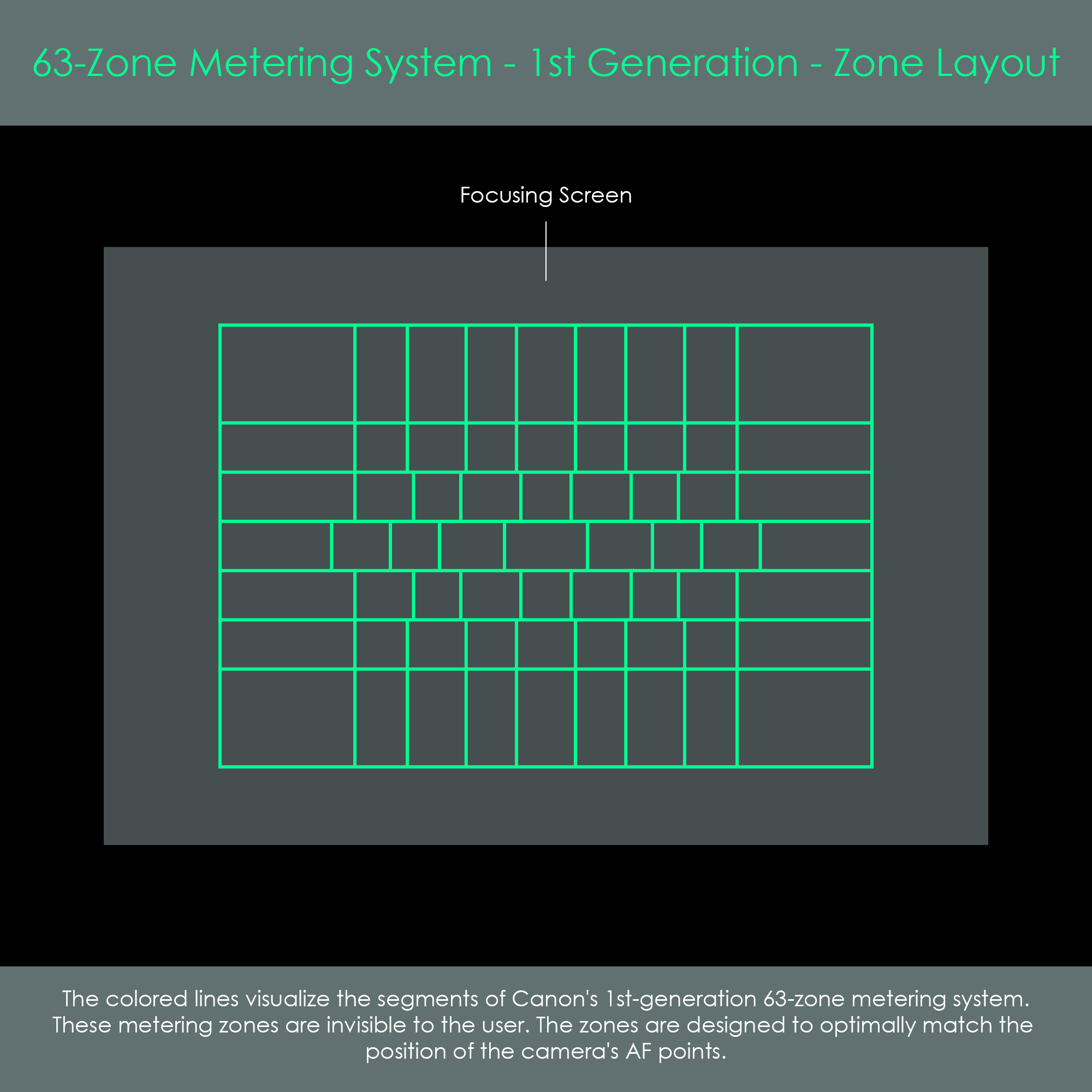
Designed for Canon EOS cameras having 45 autofocus points, this 1st-generation 63-zone metering system is basically an upgrade of the earlier 21-zone metering system.
The metering zones are not arranged in a uniform grid pattern. Instead, the size and positions of the inner metering zones are optimized to cover the 45 autofocus points provided by the camera models. These metering zones are invisible to the user.
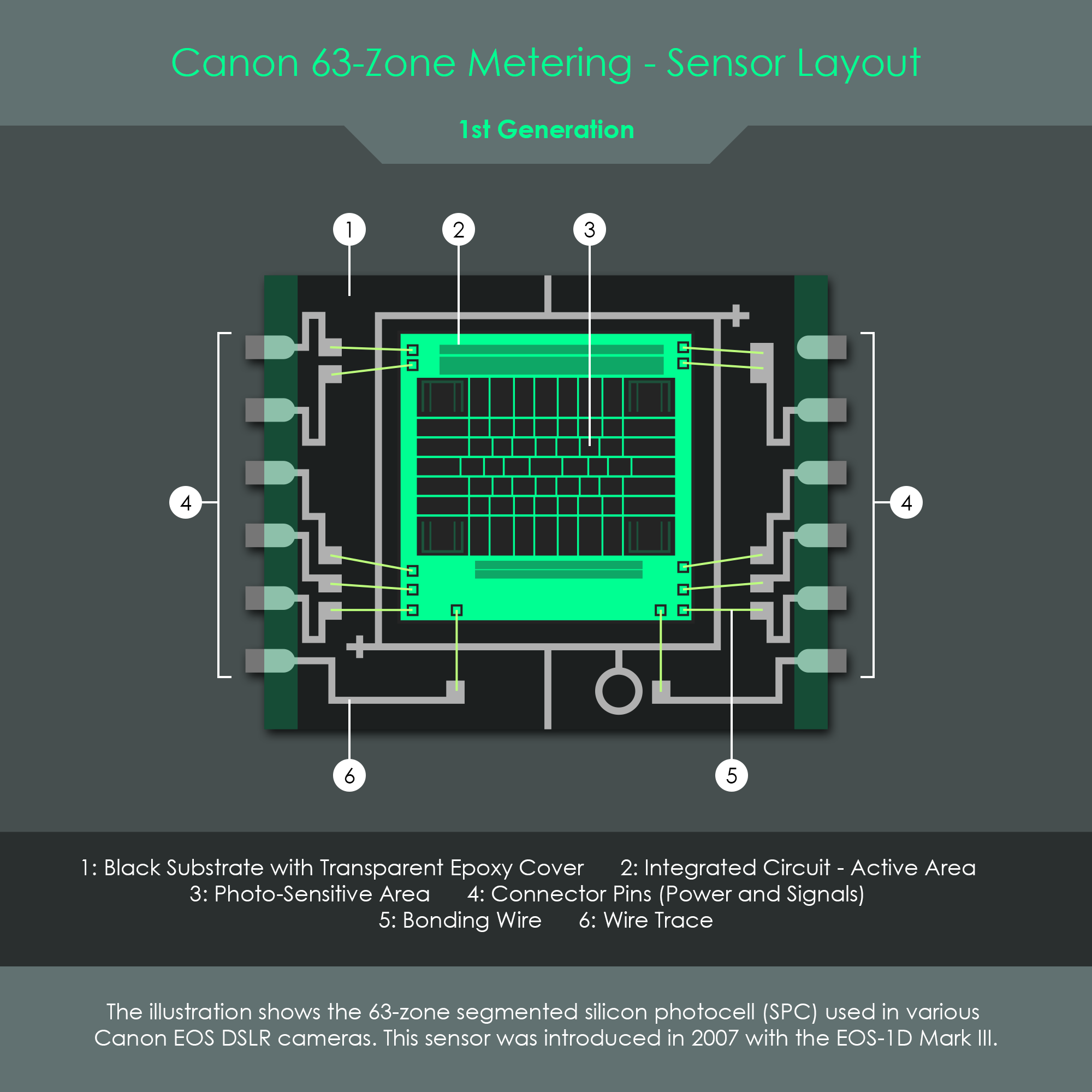
This was the first AE metering sensor that had a different package than the previous chips. For this new design, Canon embedded the wire traces as well as the chip die on a black substrate and added a protective layer of transparent optical polymer on top. The active area accommodates the light-sensitive area as well as signal processing and amplifier circuitry surrounding the actual detectors.
EV 0 - 20 at ISO 100.
This 2nd-generation 63-zone metering system was a groundbreaking innovation to Canon's EOS line of cameras. Introduced in 2009 with the EOS 7D, it was the first system that was able to perceive color, whereas all previous metering systems were only reading different greyscale levels of brightness signals (luminance). Another innovation was the introduction of the intelligent Focus, Color, and Luminance (iFCL) technology which succeeded the earlier AIM technology. The iFCL feature dramatically improved exposure accuracy by factoring in subject position, ambient light color, and brightness, rather than just analyzing raw scene luminance. The complete name of this metering system is iFCL 63-zone dual-layer metering system.
This is how Canon's intelligent Focus, Color, and Luminance (iFCL) technology works:
Intelligent Focus: The camera links its metering to the active autofocus points. The system prioritizes the brightness of the zone where the lens is locked into focus.
Color: The metering sensor uses a dual-layer technology which allows the camera to recognize color. This helps the system overcome the tendency to underexpose red subjects or overexpose blue and green subjects.
Luminance: The frame is divided into 63 zones, and each zone is analyzed for overall brightness.
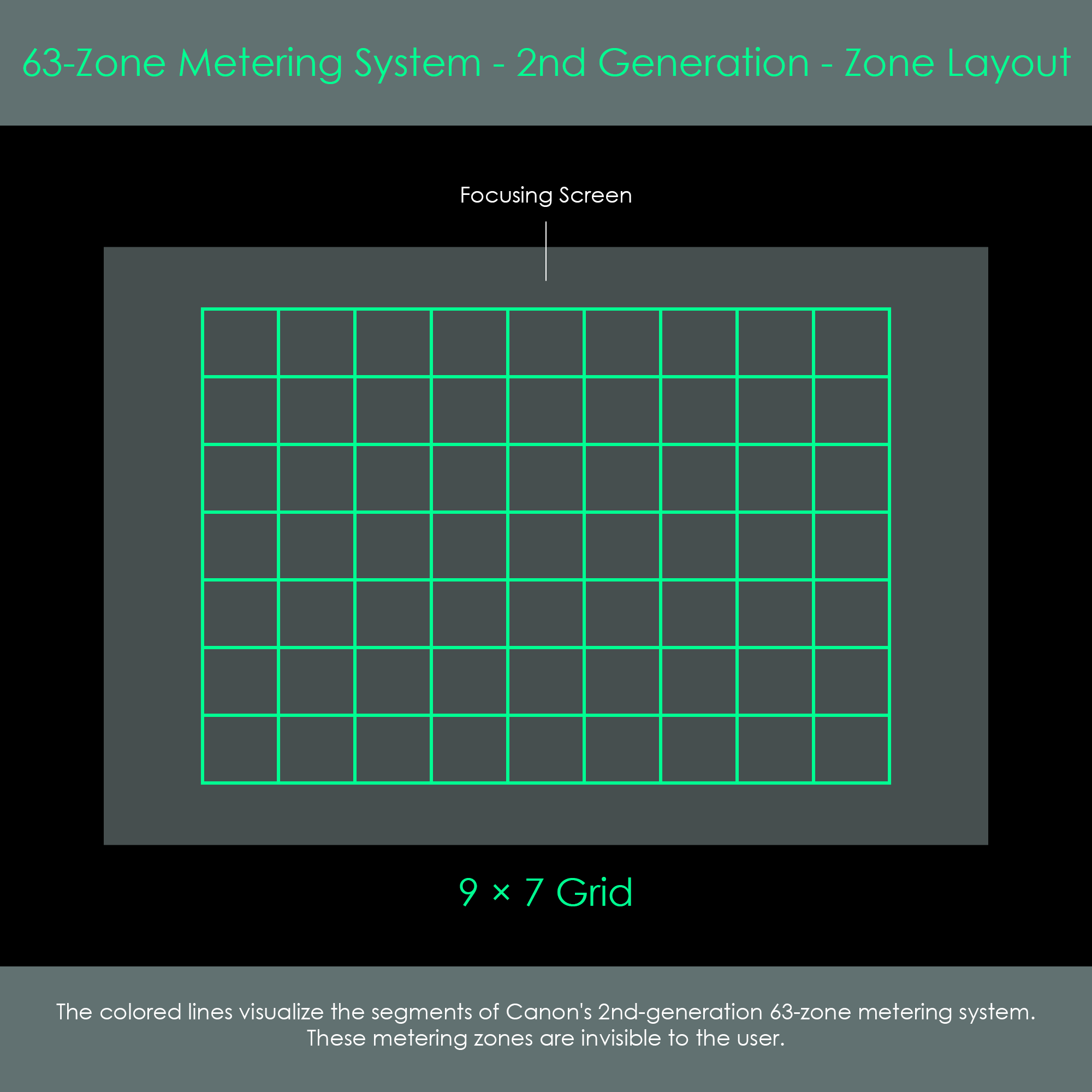
This metering system uses a grid of 9 columns and 7 rows, resulting in 63 metering zones of equal size. Its standard grid configuration ensures that it can be used on different camera models having different autofocus point layouts. These metering zones are invisible to the user.
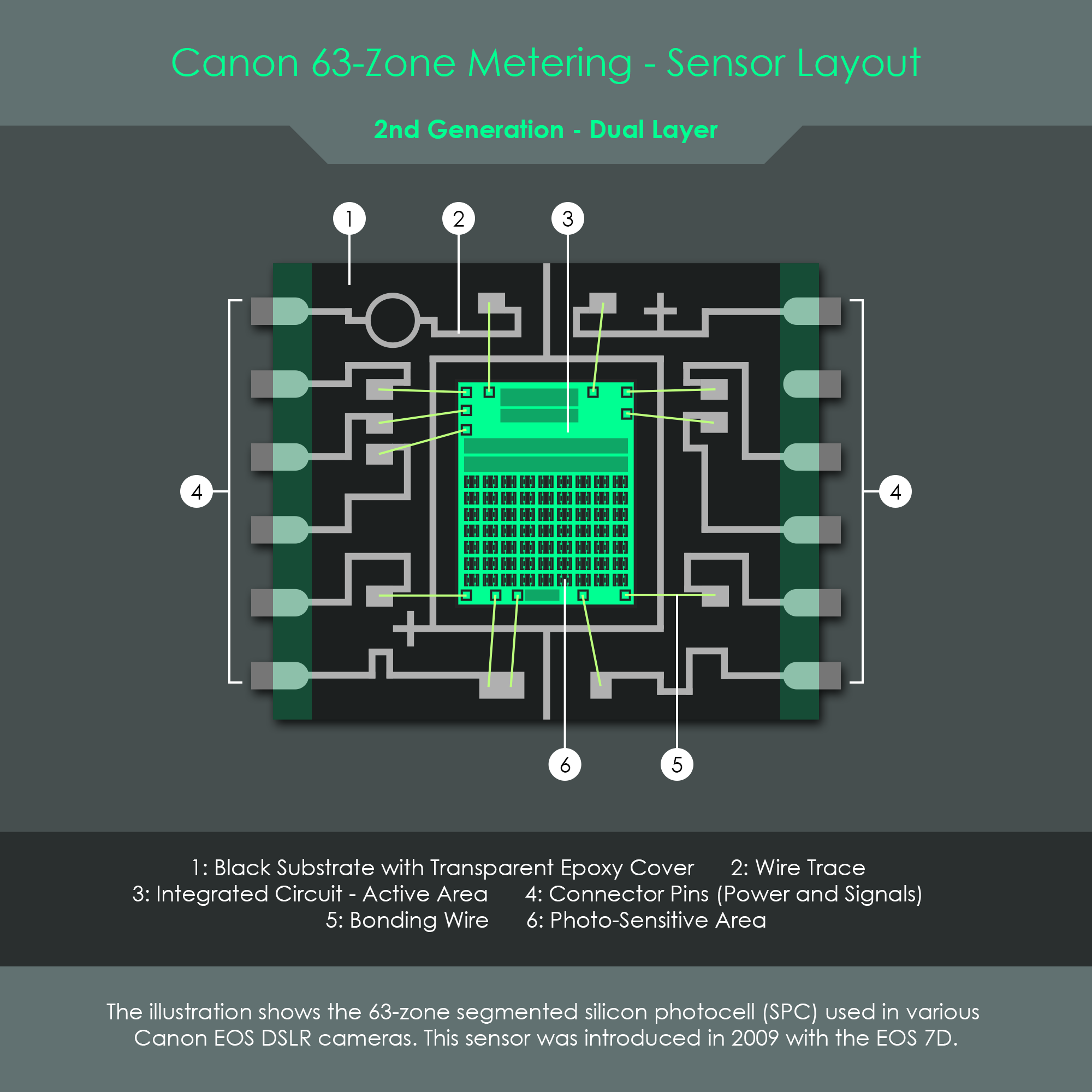
The wire traces as well as the chip die are embedded on a black substrate and a protective layer of transparent optical polymer is applied on top. The active area accommodates the light-sensitive area as well as signal processing and amplifier circuitry surrounding the actual detectors.
Conventional (single-layer) silicon photocells are more sensitive to red light than to green and blue light. In a scene with lots of red tones, the camera's metering system interprets this high output signal as a sign that the entire scene is incredibly bright. This results in the image being underexposed. The opposite is the case for scenes with lots of green and blue tones. The dual-layer system does not have this weakness. The special design with this sensor is that each light-sensitive silicon photocell (SPC) consists of two layers. One SPC layer is sensitive to red and green wavelengths of light, the other to blue and green wavelengths of light. While color perception is not quite comparable to an RGB matrix sensor, this dual-layer SPC structure tells the system whether the available light leans more toward the red or blue spectrum. The metering algorithm then compares the level of the two layers and adjusts the meter reading accordingly.
EV 1 - 20 at ISO 100.
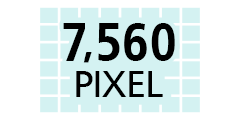
In 2015, the Canon EOS 750D introduced a 7,560-pixel RGB+IR metering sensor which replaced the older 63-zone systems. This represented a massive upgrade in metering accuracy compared to their 1st- and 2nd-generation systems. The high-resolution sensor significantly improved exposure and color detection while bringing a certain level of subject detection to entry-level DSLR cameras.
Note that this was not Canon's first high-resolution metering system. It was actually three years earlier, in 2012, when Canon introduced their first high-resolution RGB metering system with the EOS-1D X flagship camera.
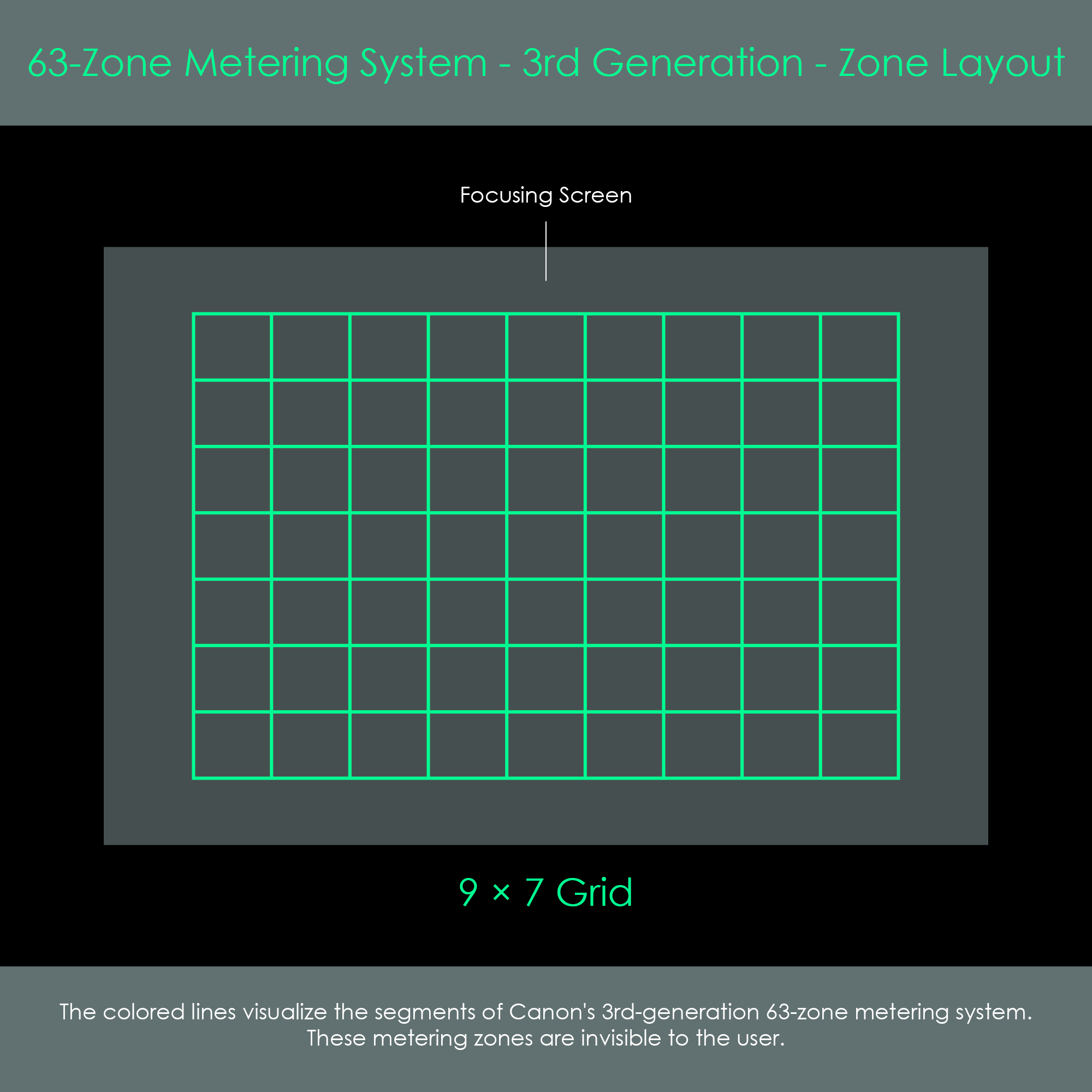
This metering system uses a grid of 9 columns and 7 rows, resulting in 63 metering zones of equal size. These metering zones are invisible to the user.
The data output provided by this 3rd-generation 63-zone metering system is fed into the EOS Scene Detection System, a feature in the camera software that analyzes color distributions on the preview image, and categorizes the shot into specific scenes (landscapes, sports, night portrait, backlit, etc.). It is usually active only when the camera is set to fully automatic shooting (Scene Intelligent Auto, often marked as A+ on the mode dial). It activates features like Auto Lighting Optimizer and Picture Styles to enhance skin tones for portraits or boost saturation for blue skies and green trees. This is a very consumer-oriented feature that is only found on entry-level products.
The subject analysis capabilities of EOS cameras using the 7,560-pixel RGB+IR metering system are less sophisticated than those of other EOS cameras using high-resolution metering systems. Instead of supporting face detection or pattern recognition for subject tracking, this system uses 'color tone detection' only to help initially select an autofocus point. It is designed to identify skin tones, making the assumption that skin tones probably represent the most likely subject in any particular scene. However, once a subject starts moving, the tracking algorithm does not use the information provided by the metering sensor but instead relies on autofocus data.
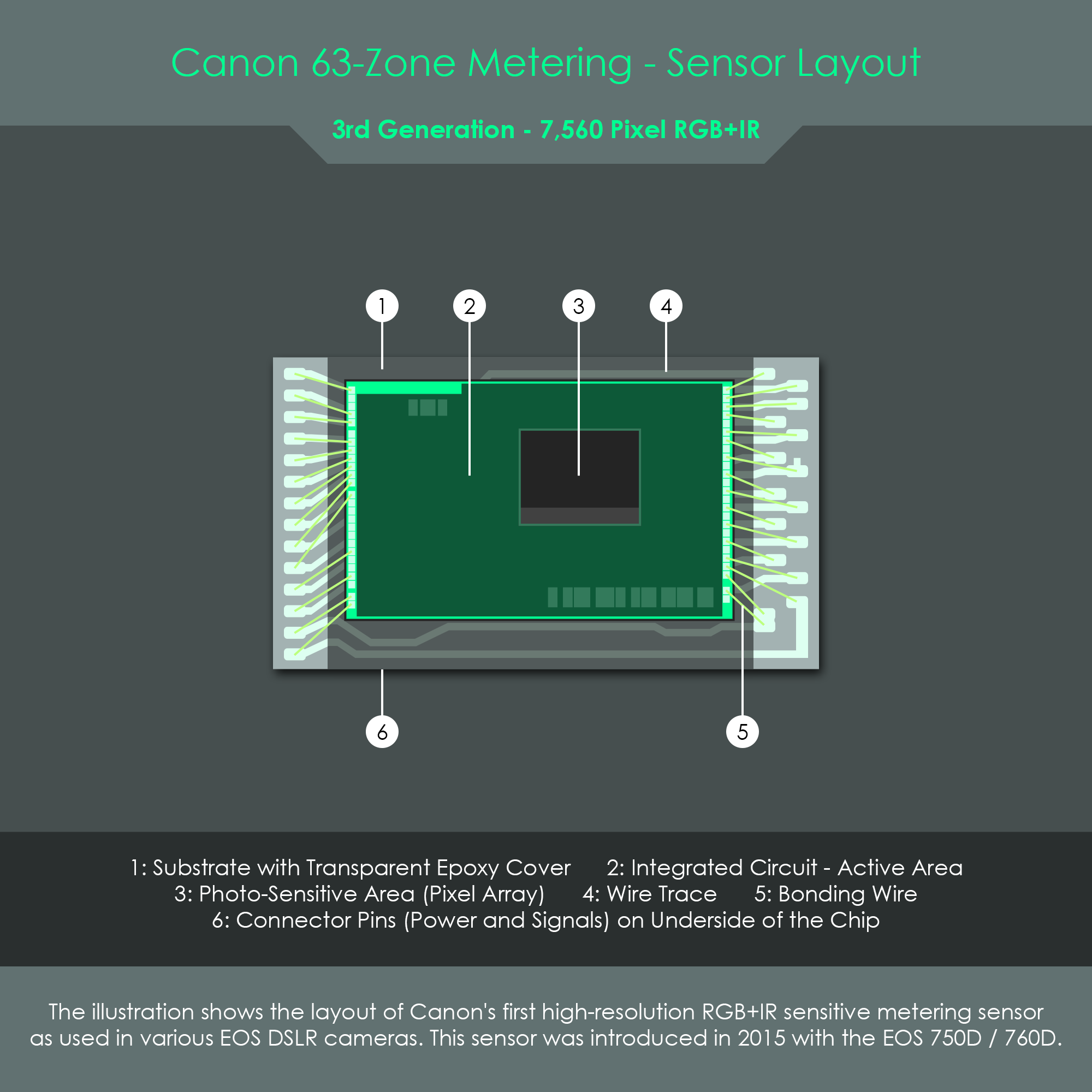
All of the sensor's components including conductive traces, bonding wires, as well as the semiconductor material (integrated circuit die) itself are completely embedded inside a clear-molded optical-grade epoxy package. The active area accommodates the light-sensitive pixel array containing 7,560 pixels capable of measuring RGB as well as near-infrared light. The active area surrounding the pixel array is used for amplifying and processing the recorded image.
EV 1 - 20 at ISO 100.