An illustrated story about how Canon went from 6-zone metering sensors (1987) to their most advanced 216-zone 400,000-pixel RGB+IR metering systems (2020).






The 21-zone metering system was exclusively developed for Canon EOS cameras having 45 autofocus points. It was introduced in 1998 with the Canon EOS-3, a professional SLR camera that came with several innovations. The EOS-3 features Canon's 2nd-generation Eye-Control AF, which allows the camera to track the photographer's eye looking through the viewfinder. The metering system instantly ties its exposure calculations to the autofocus point the user has selected (manually or via eye-control). Another added feature is called multi-spot metering. For high-contrast situations, the EOS-3 allows photographers to take up to eight individual spot readings across the frame. The camera then averages these readings together to achieve perfect exposure in highly complex lighting environments. It is also worth mentioning that the 21-zone metering system offers an increased low-light metering capability compared to the 16-zone system, effectively doubling sensitivity in the dark.
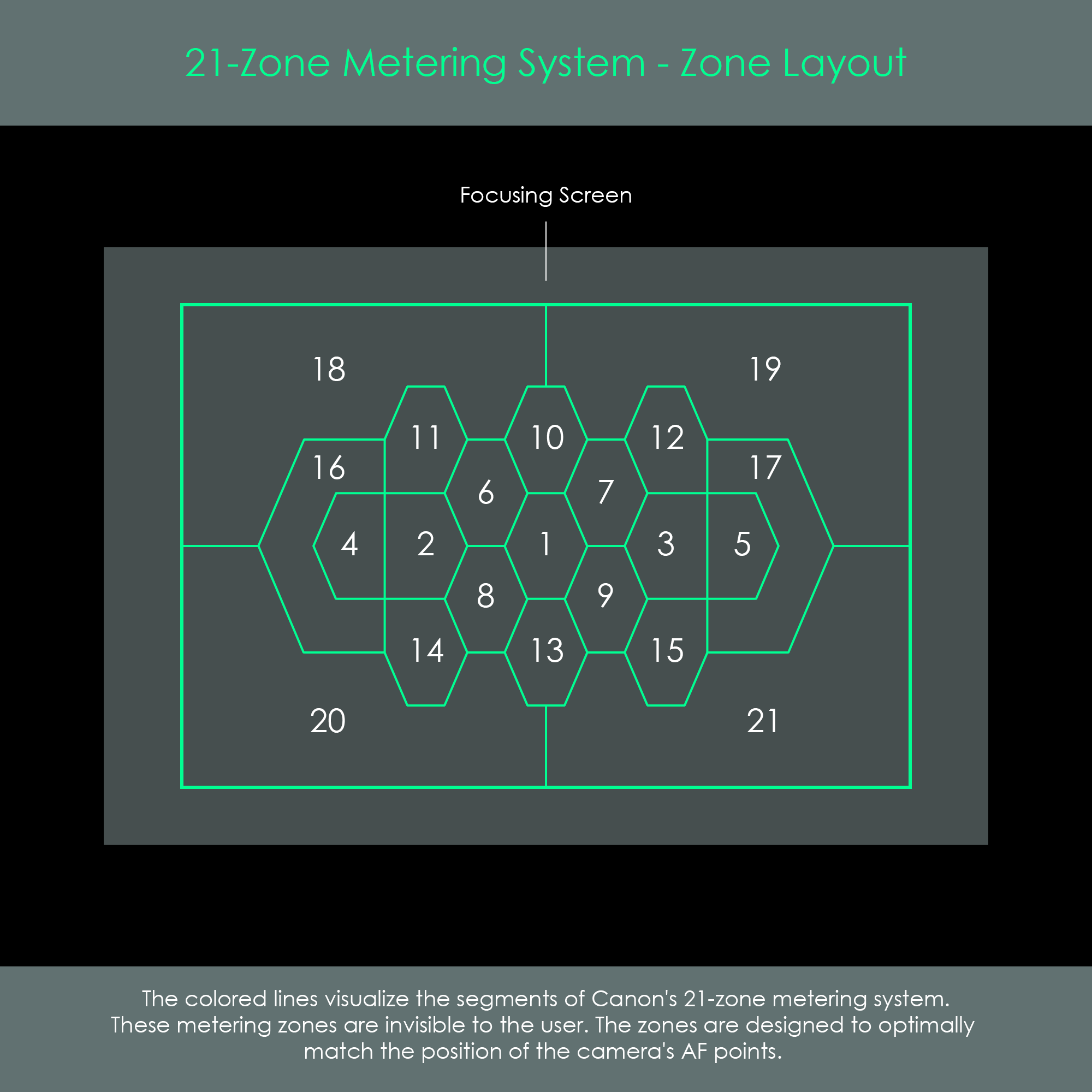
The metering system offers a total of 21 individual segments. The configuration of metering zones in the central area of the viewfinder resembles a honeycomb. Additional zones cover the peripheral area of the viewfinder. These metering zones are invisible to the user.
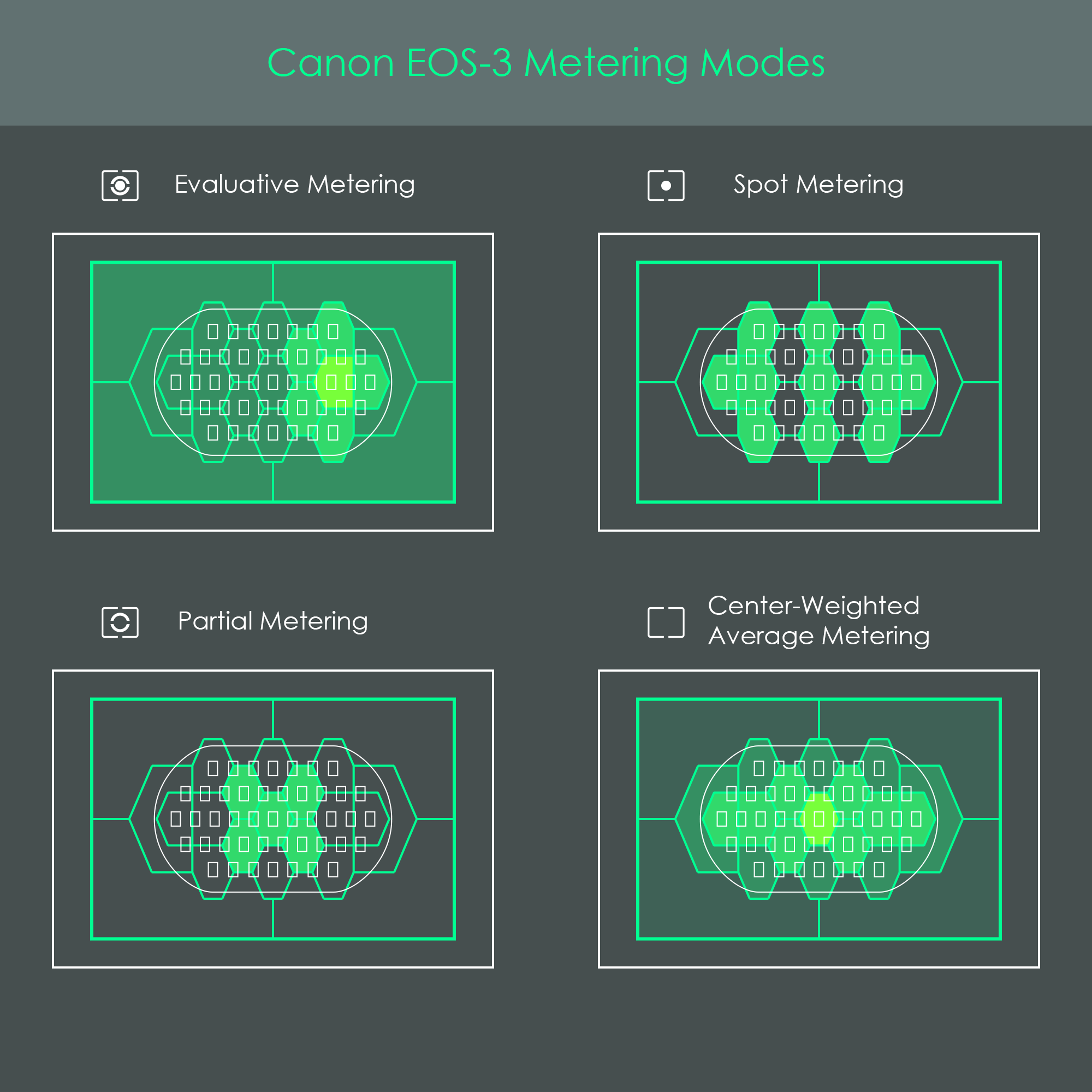
This 21-zone metering system offers the following metering modes:
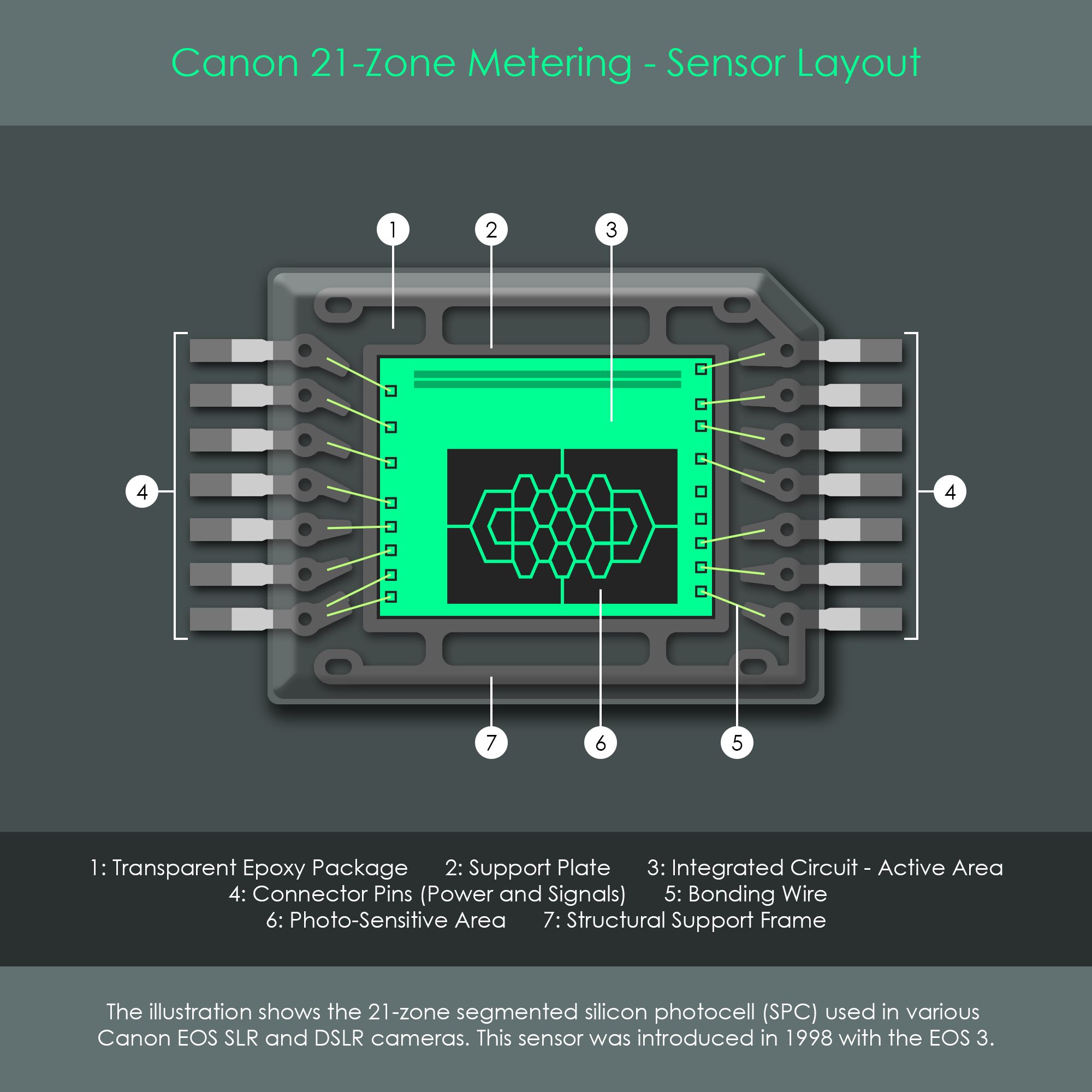
The overall sensor design is very similar to its predecessors. Support structures, connector pins, as well as the integrated circuit (IC) die are embedded inside a clear-molded package. This sensor uses a 21-zone segmented SPC (silicon photocell) as the actual light-sensitive element. Some of the IC's active area surrounding the SPC is used for signal amplification and processing. The amplification circuitry allows the camera to use auto-exposure metering even in low-light situations.
EV 0 - 20 at ISO 100.