
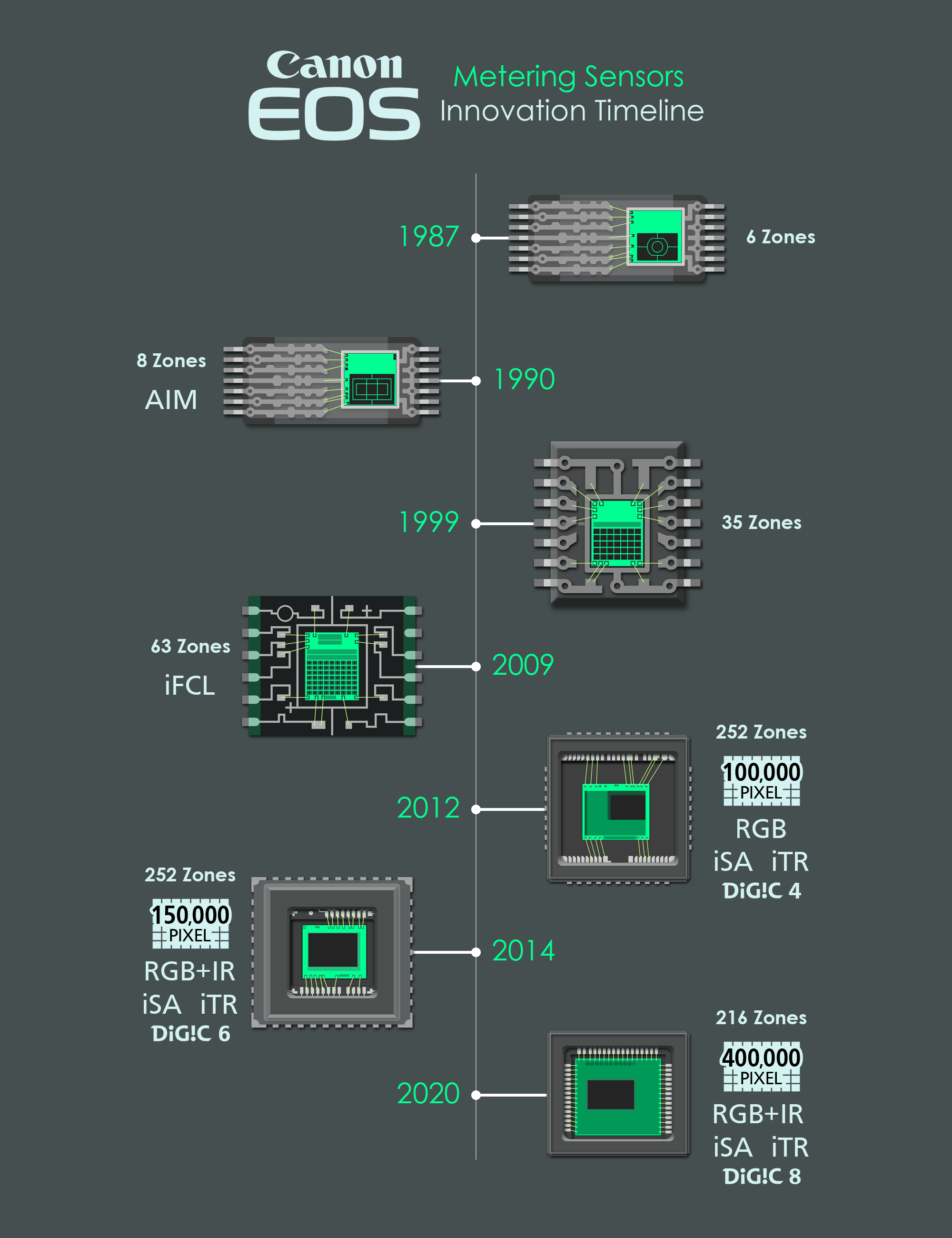
An illustrated story about how Canon went from 6-zone metering sensors (1987) to their most advanced 216-zone 400,000-pixel RGB+IR metering systems (2020).














Since the introduction of their EOS series of cameras in 1987, Canon has developed 15 auto-exposure metering systems. This article is a completely unique technical presentation of all the metering technologies Canon has ever used in their EOS SLR and DSLR cameras.
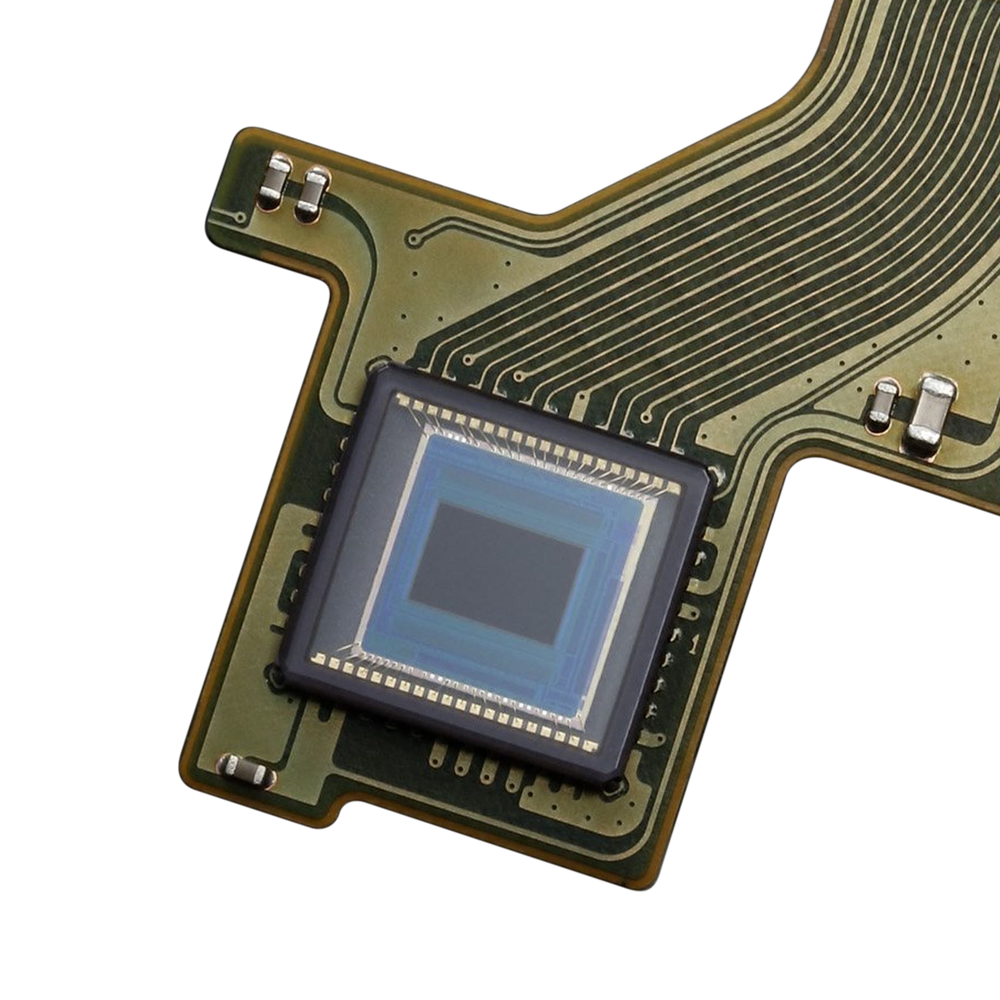
The following chapters tell the story of how exposure metering systems have evolved over the past 34 years from simple black-and-white 6-zone sensors to highly precise 216-zone color- and infrared-detecting systems capable of recognizing hidden faces using deep-learning artificial intelligence. The cover image shows the metering sensor of the Canon EOS-1D X Mark II flagship camera.
Auto-exposure (AE) metering is a general term for all metering systems that automatically measure the intensity of light that is available for the photograph in order to set the correct exposure. An image is correctly exposed when relevant subject areas are neither too bright (overexposed) nor too dark (underexposed).
The use of electronic light meters in photography dates back to the early 1930s. At that time, selenium photocells were used; later, in the 1960s, cadmium sulfide photocells were introduced; and finally, starting in the 1970s, silicon photocells (SPCs) came into use. You can read more about the history of light metering techniques here. These early exposure meters were designed to read the intensity of light directed at the camera (luminance) as one average value across the entire photographic scene. With the introduction of their EOS line of SLR cameras in 1987, Canon introduced segmented SPCs which divided the preview image into separate zones. The simultaneous use of microprocessors made an innovative type of image analysis — called evaluative metering — possible. Driven by the rapid advancements in microelectronics, Canon's metering systems have evolved into highly advanced subject analysis and autofocus tracking systems.
Here is what you can and cannot expect from the presentation that follows:
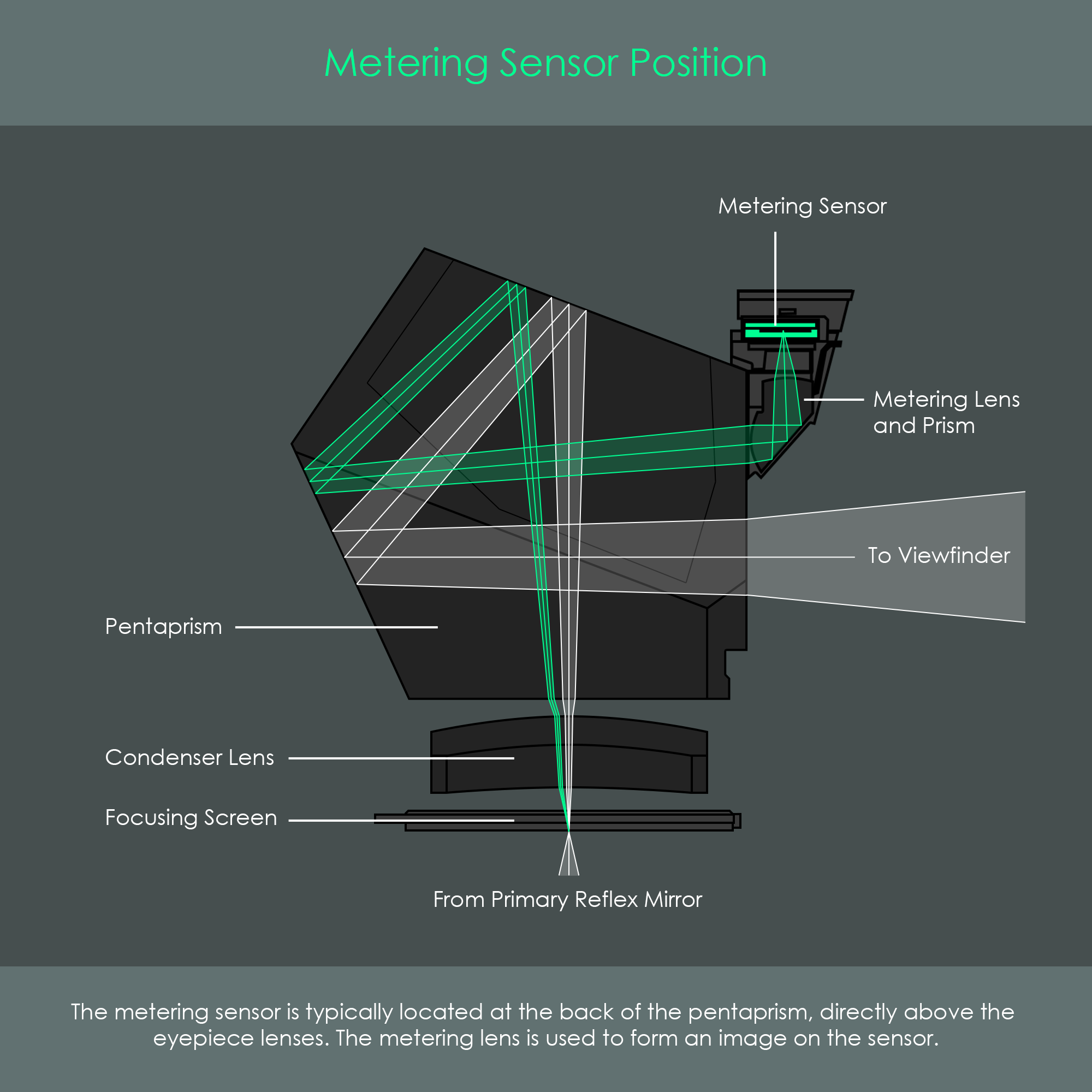
The metering sensor that is used during viewfinder-shooting is typically located above the eyepiece lenses at the back of the camera's pentaprism (or pentamirror, depending on the camera model). The metering system uses an own lens element, which is either a biconvex lens or a prism with two of its sides ground into spherical surfaces. This metering lens collects light from the focusing screen to form an in-focus image on the sensor, covering the entire photosensitive silicon on the sensor with a copy of the viewfinder image. Depending on the distribution of light and the layout of metering zones, the sensor produces electrical signals for the camera electronics to analyze.
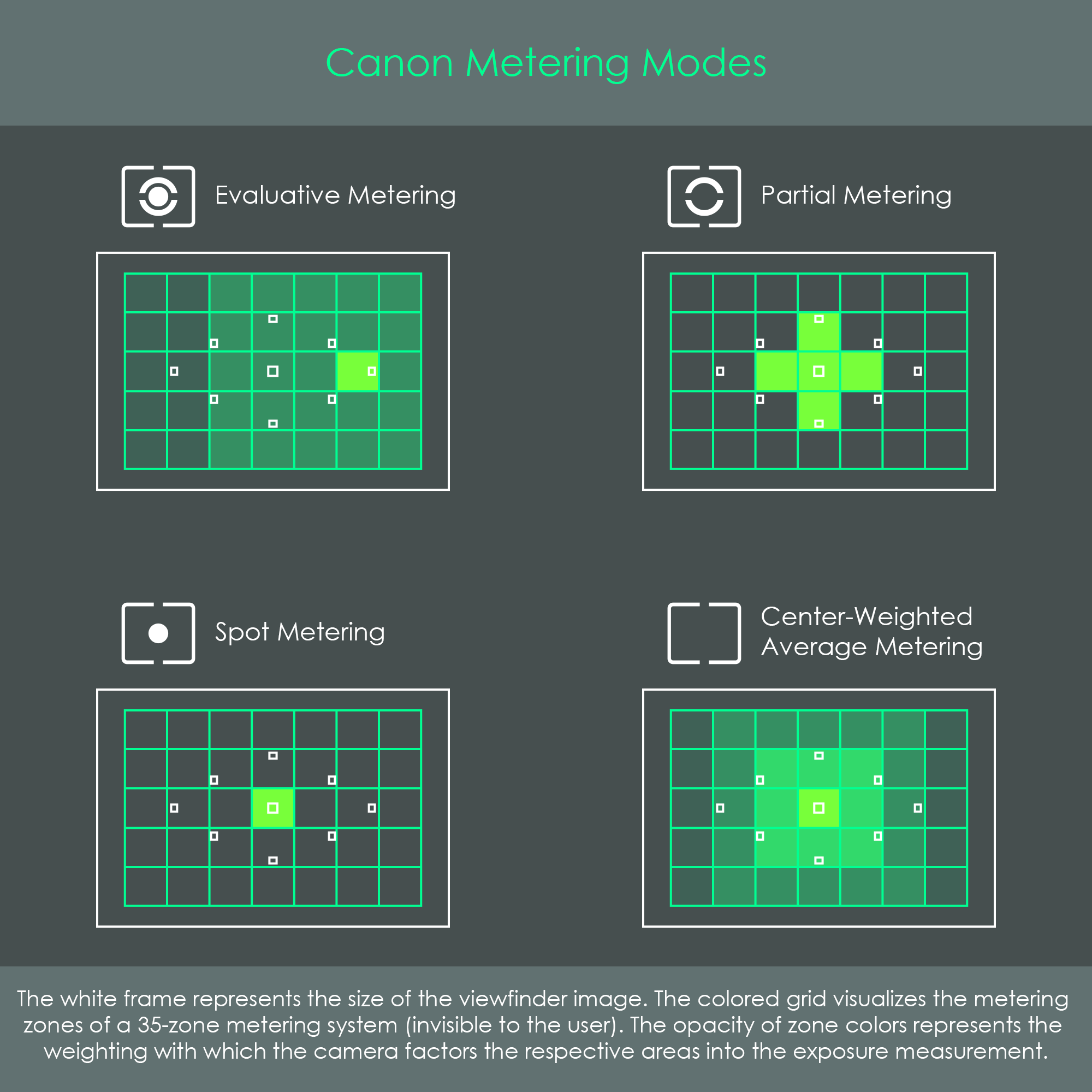
Over the years, Canon has introduced four different metering modes, also called metering patterns. Some of these metering modes had already existed since the 1960s — such as partial metering — but computer-controlled EOS technology, in particular, played a key role in the rapid development of diverse and powerful exposure metering systems. In 1987, the Canon EOS 650 was was released as the first EOS camera, and it was equipped with a revolutionary multi-zone evaluative metering. Later, in 1992, the EOS-1N was released, featuring high-precision spot metering. Here is an overview of how the four metering modes work in detail.
Dive deeper into these technologies in the following chapters!